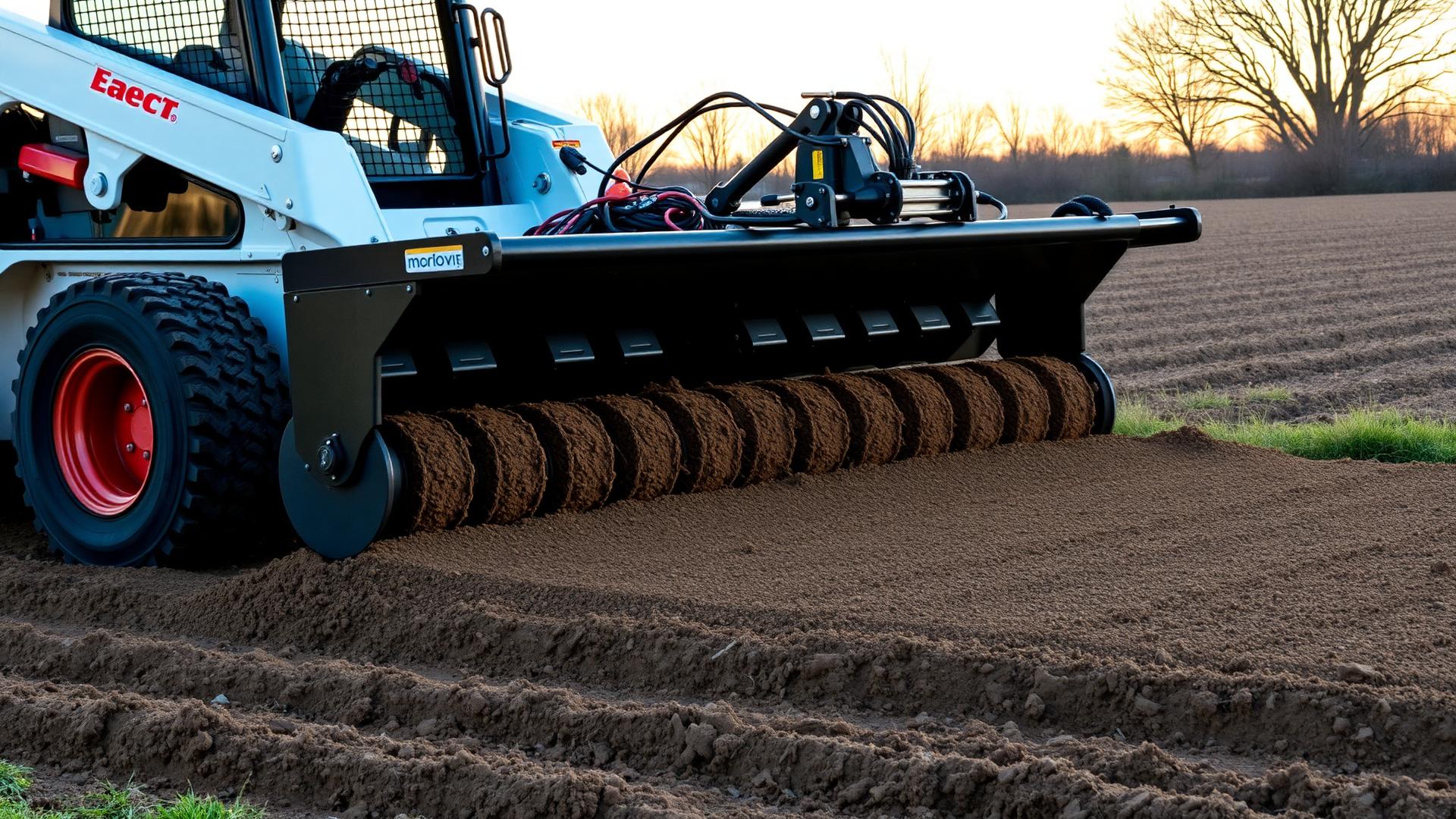
A power rake is a skid-steer attachment with a hydraulically driven, carbide-tipped drum that lifts, separates, and grades the top layer of soil in a single pass. Roots, rocks, sticks, and debris come up and windrow to the side; clean, loose, evenly graded soil stays behind.
It's the finishing tool — the difference between "cleared" and "finished." Use it on freshly mulched ground for a manicured look, on tired driveways to reclaim lost gravel, on new-build lots before seed or sod, or to reset a worn-out yard from the surface down.
Every job below uses the same machine, with the process tuned to the surface and the goal.
Gravel Driveway Repair
Reclaim, regrade, and recondition tired gravel drives.
Over time gravel drives wash out, develop ruts, and lose their crown — pushing stone into the ditch and leaving soft, muddy spots behind. The power rake's carbide-tipped drum pulls displaced gravel back out of the shoulders, breaks up packed surface, and re-screeds the driveway to a smooth, properly crowned profile that sheds water instead of holding it.
Why this works
Pulls lost gravel back from the shoulders
Breaks up packed ruts and washboard
Re-establishes crown for proper drainage
Often saves a full load of new stone
How it works
1Walk the drive to identify low spots, ruts, and ditch loss.
2Rake displaced gravel back onto the driving surface.
3Grade and crown the surface, then finish-pass for a clean ride.
Food Plot Prep
Tilled, level, weed-free seed bed ready to plant.
After mulching or initial clearing, a food plot still needs a real seed bed — not a bumpy field of roots and chunks. Power raking pulls out remaining roots, rocks, and woody debris, breaks the soil down to a fine, plantable tilth, and leaves a level surface so seed-to-soil contact is consistent across the plot. The result is faster germination, better stands, and noticeably stronger draw for whitetail.
Why this works
Removes roots, rocks, and surface debris
Creates fine, plantable tilth
Levels low spots that pool water and drown seed
Improves germination and overall plot performance
How it works
1Confirm plot boundaries and check soil moisture.
2Rake the plot, separating rock and root from soil.
3Final-grade level and ready to broadcast or drill.
Premium Mulching Finish
An upgraded, manicured finish on freshly mulched ground.
Forestry mulching leaves a clean, walkable mulch layer — but for clients who want a true park-like look, a power rake follow-up is the next level. The rake breaks up clumped mulch, pulls remaining surface roots, smooths over track marks, and evens out high and low spots. What was a working mulch finish becomes a manicured, lawn-ready surface.
Why this works
Smooths out tracks and high spots
Breaks up clumped mulch for a uniform finish
Removes any surface roots left behind
Park-like, manicured appearance
How it works
1Walk the mulched area and flag any surface obstructions.
2Rake to break and redistribute mulch and topsoil.
3Finish-pass the entire site for a smooth, even surface.
Trail Finishing
Smooth, ridable trails that drain and hold up.
A freshly cut trail is usable, but it's still rough — surface roots, soft humps, and uneven track lines. Power raking takes that rough corridor and turns it into a true trail: a smooth, consistent running surface with a slight crown so water sheds off instead of cutting in. The result is quieter, faster, and far more durable for ATVs, side-by-sides, and foot traffic.
Why this works
Smooths surface for ATVs, UTVs, and foot traffic
Establishes drainage so trails don't wash out
Removes nuisance roots and high spots
Looks and rides like a built trail, not a path
How it works
1Walk the trail with you to set width, grade, and drainage.
2Rake the running surface and shape the crown.
3Final-pass for a smooth, ride-ready finish.
New Build Lot Finishing
Job-site cleanup and seed-ready grade for new construction.
After excavation, framing, and trades wrap up, the average new-build lot is left rutted, compacted, and littered with construction debris and surface rock. Power raking cleans it up in a single operation: separating debris and rock from the soil, breaking up compaction, and leaving a smooth, properly graded surface that's ready for seed, sod, or final landscaping.
Why this works
Pulls out surface rock, concrete chunks, and debris
Breaks up wheel ruts and compaction
Smooth, seed-ready or sod-ready grade
Saves the landscaper hours of hand work
How it works
1Confirm finish elevations and any drainage requirements.
2Rake the lot, separating debris from clean topsoil.
3Final-grade smooth and turn it over to the landscaper.
Lawn & Yard Restoration
Reset a tired, bumpy, or damaged yard from the ground up.
Lawns get beat up — by construction traffic, drought, neglect, or simply years of mower ruts and settling. Rather than fight a losing battle of patch seed and topdressing, power raking strips the old surface down, breaks up compaction, removes thatch and debris, and re-grades the yard smooth. It's the right starting point for a real, full-yard reseed or sod install.
Why this works
Removes dead turf, thatch, and surface debris
Breaks up compaction so roots can establish
Levels mower ruts, settling, and low spots
Ideal prep before reseeding or sodding
How it works
1Inspect the yard and identify drainage and grade issues.
2Rake the surface, separating thatch and debris from soil.
3Final-grade smooth and ready for seed or sod.
FAQ
What is power raking?
Power raking uses a hydraulically driven, carbide-tipped drum attachment on a skid steer to break up, separate, and grade soil in a single pass. It pulls rock, root, and debris out of the soil while leaving a smooth, finish-grade surface behind.
How is it different from forestry mulching?
Forestry mulching grinds standing brush and trees into mulch. Power raking is a finishing tool — it works on already-cleared ground (or existing surfaces like driveways and yards) to grade, smooth, and prep for seed, sod, or use.
Do I need both services?
For a brand-new clearing project, yes — mulch first to clear vegetation, then power rake to finish the surface. For driveways, lawns, and existing graded areas, power raking on its own is usually all that's needed.
Will it remove every rock?
It pulls and separates the vast majority of surface rock and root. Buried boulders aren't a power rake's job, but anything in the working depth gets surfaced and windrowed off.
How much area can you cover in a day?
Depending on conditions and the level of finish, typical production is roughly 1–3 acres per day. We scope each project during the on-site quote.
Ready to Get Your Property Cleared?
Send us your project details and we'll be in touch within 24 hours to schedule your free in-person walk. Prefer to talk? We're a phone call away.